Thursday, 26 March 2009

Space Exploration

On the 23rd of March 2007 Jo Hollis made a video of me talking about space travel in a studio of BBC Radio Leicester. The BBC website now refers to me as having always had a fascination with space and technology.

On the 16th of July 2008 I met Rajiv Popat from ITV Central News. I told him about my ambition to be the next man on the Moon and asked him to access my weblinks, which he agreed to do later. This was outside the City Council building on Leicester's King Street. I believe he had a protest to report there.

The How and Why Wonder book of PLANETS And INTERPLANETARY TRAVEL states that people have always wanted to conquer worlds, lands and mountains. Some to find a precious commodity such as gold. Others for the romance and adventure of being the first to fly across an ocean, for example. Others might have wanted to be the first to explore the world's deepest cave.

Whether or not I ever become an astronaut I still think the ambition has a purpose. For one thing, even if I never get to explore the lunar surface in person, I would still like to explore the surface online, at an IMAX theatre (wearing the specs for 3D vision) and at a planetarium. I think there is still so much of the lunar surface yet to be explored. I would like to see the Earthlight in the lunar night, to give but one example. I don't think this phenomenon has ever been seen by human eyes before. Just think how spectacular the Earthshine in the lunar night would look! It would probably appear to shimmer like glowing sapphire. Also, I would like to see mountaineering on the Moon. I would like to see lunar mountaineering, therefore. After all, Thomas Harriot and Galileo apparently saw lunar mountains through their telescopes back in 1609. Well, at the time of writing in 2009, those mountains still haven't been climbed. Neil Armstrong and Buzz Aldrin apparently wanted to reach the Moon and now I want to explore the Moon. But what about Michael Collins? He was the one who apparently had to stay in the command module in lunar orbit. I don't thoroughly understand why. Wasn't it unfair on his part? Didn't he want to walk on the Moon with his colleagues?

What about Moonbase Alpha? Isn't it already 10 years behind schedule? How about, as it were, Mir on the Moon? Has anyone but me ever volunteered to be the next one there? It seems that the next man on the Moon will be Chinese. However, no Chinaman seems to have volunteered to do this as yet. It might also be anticipated that the next man on the Moon will be Indian? Has anyone from the so-called sub-continent volunteered to go there? If so, who?

Of course I would also like to explore the other terrestrial worlds of the solar system online, at the IMAX and at a planetarium. If people aren't going to do this in person I think robotic rovers should be sent there, preferably ones that would be able to levitate. By "rovers" I could mean Land Rovers or Range Rovers. After all, lunar rovers were used by certain Apollo astronauts, so how about using the sort that are used on Earth over there? How about, therefore, sending any kind of road vehicle to the surfaces of other worlds?

Furthermore, DCI Hunt in Episode 6 of Ashes to Ashes, set in 1982, tells Donna whilst he's about to arrest her that everyone except her will be zipping around in flying cars and living on the Moon by the first decade of the 21st century.

Monday, 12 January 2009

Levitation

There appears to be the 5 Point Method of antigravity on YouTube. I would like everyone to see how it seems to work. I believe this method could even be tried at home. This is not to mention the antigravity lifter experiment, the Hutchison Effect and the Levitron which I've also seen demonstrated on YouTube. The Hutchison Effect is even explained at http://www.wikipedia.org/. Also, I've seen Criss Angel apparently levitate from building to building on YouTube. As for the Anti-Gravity Globe, I've seen one being demonstrated in Dominoes toy shop on Leicester's High Street. I believe it is referred to as a must have for home and office. This is not to mention the model car I've seen spinning in the air by means of levitation also on YouTube . Also, Professor Roy of the University of Florida seems to have designed the WEAV. Despite the appearance it is meant to be an IFO, not a UFO. Images of the WEAV should be easily obtainable via Google. This is not to mention the Harbin Smart Special Aerocraft. All this has promted me to suggest the ca-saucer, inspired by Steve Johnson's ca-boat which was apparently tested back in July. I believe he used a Pontiac Sunbird for this contraption. I would like such technology to become commercially viable in due course. I would like cars to be airborne, even if they would only be able to fly vertically and hover for recreation. I feel there is hope for such technology yet!

Back in July last year, probably on the 25th, I dreamt I was being transported in a levitating box. I thought this was the 21st century for me. I was later disappointed to learn that it was only a dream. On the 22nd of November last year I dreamt I was levitating slightly by bending a couple of paperback books. I thought at the time that it seemed a good start. I was also disappointed to learn that this was only a dream. On the 6th of November of this year I dreamt I was able levitate by concentration, convincing myself I could do it like Dr Who in the TV Comic Annual 1971. Once again I was disappointed to learn it was only a dream.

I would like cars to be able to levitate to say the least. I think the list of possibilities would therefore be practically endless. I even envisage the possibility of such transport being able to levitate from one world to another, such as from the Earth to the Moon. For one thing the government's plan to build a third runway for Heathrow wouldn't be necessary if all the aircraft could take off and land vertically. In fact the airports wouldn't need any runways at all. Runways do seem to take up valuable land after all. In any case, I do believe the proposal is to sacrifice a community in the process. Furthermore, in the Enclyclopedia of Aviation, published in 1977, there seems to be a photograph of Skyship whilst airborne at Cardington Hangar. It was apparently made airborne by means of bags of helium. According to the caption it was anticipated to eventually enter commercial service for passengers and freight. This is not to mention the idea of levitating trains that would require no rails. A high-speed rail link currently seems to be in the pipeline for both Britain and California. Well, if the trains could levitate without the need of rails the schemes to build new railways would simply be out of the equation.

Back in the 19th century Daniel Dunglas Home was reputedly observed levitating out of a building through a third story window and back into the building via a different window. He could also reputedly cause tables and chairs to levitate, and was never demonstrated to be a fraud by hundreds of purportedly sceptical witnesses and tests. He remained fully concious throughout these feats, and attributed them to some kind of magical energy.

Speaking of the 19th century, however ridiculous levitation may seem at present please note that back in the 19th century the aeroplane didn't seem very promising.

Friday, 31 October 2008

Dent Resistance

Have you visited http://www.ussautomotive.com/ and http://www.azom.com/? Both these websites seem to provide information on dent resistant steel. Isn't it time such technology was fully implemented? On the 29th of July 2005 the BBC news reporter Dermot Murnaghan paid a visit to my home city of Leicester and I got a security man to pass on my details pertaining to dent resistant bodywork. I saw him walk away with the piece of paper in his hand.

The Ford Motor Company, on the other hand, do not seem to be prepared to help me there. I received a reply from New Ideas on the 6th of March 2007 about this. Their e-mail address is newideas@ford.com. My MP, Sir Peter Soulsby, however, wished me luck with the other manufacturers.

People don't seem to want their vehicles being dented and now technology seems to have the solution. Wouldn't you appreciate dent resistance yourself? My suggestion is that dent resistant bodywork could hold the key to Korea's eventual reunification.

Furthermore, according to Arthur C Clarke's book about 2019, 50 years after Apollo 11, sheet metal by then will have gone the wayof wood panelling and will have been superseded by dent resistant plastic. This has simply strengthened my commitment to lobby for dent resistant bodywork.

In the past I have lobbied for dent resistant bodywork. I think this would increase the vehicle's crush resistance. Furthermore, there seems to be an image of dancers demonstrating the strength of the Turret Top of the 1935 Chevrolet Master Deluxe Sedan at http://www.gmphotostore.com/. I think all modern vehicles should be able to provide even better technology in this respect to say the least. Furthermore, back in 2000 I seem to recall the Chevrolet Suburban and Tahoe models being referred to in the Chevrolet website as featuring dent-resistant steel body panels.

Wednesday, 13 August 2008

The Solar System

I would like the solar system to be thoroughly explored. I would therefore like all the terrestrial worlds of the solar system to be explored in surface detail.

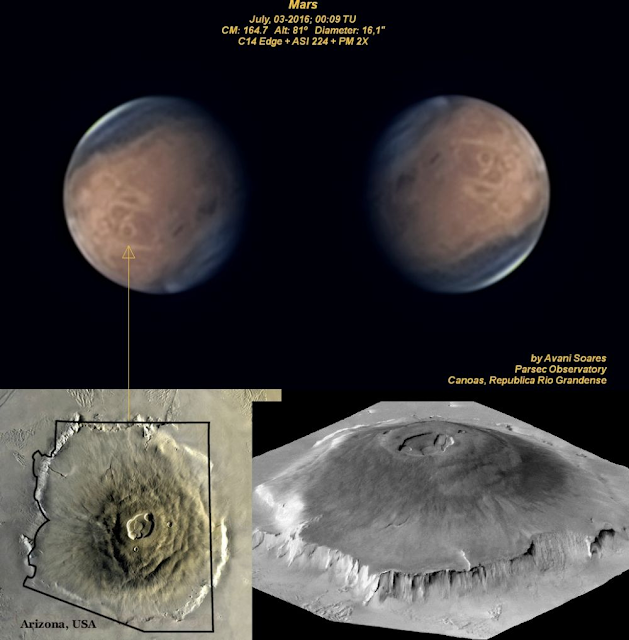
To give but one example, I would like to see how it would appear if an observer was standing within the caldera of Olympus Mons. On January the 19th 2006 Matthew Golombek from NASA ridiculed my suggestion that a rover could climb the slope of Olympus Mons and eventually descend into its caldera. According to the Observer's Book of Astronomy, revised in 1971, NASA had made an official forecast to send men to Mars before 1990. The Viking landers arrived there before 1980. If men HAD already gone to Mars, what more would there be to see apart from men in spacesuits in so far as the general public is concerned?

To give but one other, the Saturnian moon Dione appears to have a couple of craters that seem to resemble two dividing cells or two mammary glands joined together. How would it appear if an observer was standing directly between them? The other craters of Dione I've noticed also seem to resemble human nipples. How would it appear if an observer was standing at the summit of one of those "nipples"?

To think that space exploration hasn't gone very far since Apollo 17 is a top-heavy view as far as I'm concerned. In the 2001 that turned out to be the Huygens lander was already on its way to Titan. How does this compare with the Space Odyssey in effect? In the 1969 film Marooned Gregory Peck announced that the solar system would be explored in due course.

Having seen the "stars" down below from an aeroplane in detail I would now like to the the ones from up above in detail. Those "stars" are in fact planets, but the ancient people didn't know any better as they didn't have telescopes. So they thought of them as wandering stars. Incidentally, this is why they are now known as planets. The term "planet" is derived from the Greek word pertaining to wandering as they were seen as the wandering stars. When I saw what appeared to be stars down below on board the aeroplane en route to Israel, probably in April 1969, I genuinely thought the aeroplane was flying above the stars. After all, it did appear to fly above the clouds.

Friday, 11 July 2008

Moons

I would like to be the next man on the Moon! I have this ambition not just because I would like to make history but also because I would like to explore the lunar surface. People can visit other lands so why not other worlds as well?

Galileo, who lived 400 years ago, saw lunar mountains through his telescope. Now I would like to go mountaineering there. I think it would be so much easier because of there being so much less gravity. Whilst he was at it he probably discovered the lunar Apennines. It is probably one of those mountains that is the Moon's highest. In height it would perhaps correspond to an Earth mountain 35 miles high! Speaking of Galileo, I do believe he also discovered the largest moons of Jupiter using his telescope, which are known as the Galilean moons in his honour. Needless to say, I would also like THEM to be explored in surface detail. I would like them to be explored by rovers, preferably levitating rovers as they would be independent of terrain.

Also, Ada Jones had a song recorded on phonograph cylinder by Edison Records titled The Moon Has His Eyes On You. Well, I do believe Alan Shepard from Apollo 14 stated that the Earth looked like an eye. From what he said, the ancient people, had they lived on the Moon instead of the Earth, would've seen the Earth as a divine eye watching over them.

Also, I believe there are craters on the lunar surface which seem to resemble two dividing cells. How would it appear if an observer was standing directly between them? I believe the Saturnian moon Dione has such craters. Speaking of craters, the Earth's moon seems to have the Eratosthenes crater. How would it appear to an observer standing on its rim? How would it look to an observer standing on the summit of what appears to be a mountain in the middle? How would it look to an observer approaching this feature? There is so much I would like to learn.

Furthermore, according to the Hamlyn book of Astronomy by Iain Nicolson, published in 1970, a permanent Moon base seemed likely by 1980.

As for robotic rovers, if NASA can send such rovers to Mars, why don't they pop one over to the Moon? I think there is still so much of the lunar surface which hasn't been explored. How about photographing the lunar surface on the FAR side for example? How about locating and photographing the wreck of Luna 2 for another?

The Apollo 12 landing module in 1969 landed very close to where Surveyor 3 landed in 1967. NASA presumably knew where Surveyor 3 landed with almost pinpoint accuracy. I therefore do no think locating the remains of Luna 2 would be much of a problem, which apparently became the first man-made object to reach the lunar surface.

All this has made me conclude that NASA are dragging their feet about returning to the Moon, even about sending robots there.

What of the other moons of the solar system? Just think how spectacular Jupiter might look in the night sky to an observer on one of its moons? What about Saturn in the night sky to an observer on one of its moons? As for Titan, if the night half of the world was facing Saturn, Saturn would probably appear similar to a rainbow in appearance, albeit more spherical in shape, in the murky haze. To an observer on Triton, Neptune would presumably also appear blue. Incidentally, I do believe Neptune is aptly named after the Roman (and probably Greek) God of the Sea. As for an observer on the Earth's moon, I believe the Earth would appear blue to such an observer due to the extensive ocean cover. I do believe this is why the Earth appeared to be shimmering like sapphire to the crew of Apollo 8.

Saturday, 24 May 2008

Impact Resistance

Judging from the crash test results I've seen at http://www.safercar.gov/, http://www.euroncap.com/, http://www.iihs.org/ and on YouTube, the vehicles that seemed to perform relatively well were the:-

Audi Q7
BMW 3 Series
Chrysler Sebring
Chevrolet Captiva
Chevrolet Colorado
Dodge Charger
Dodge Durango
Dodge Nitro
Ford Explorer
Infiniti FX
Jeep Liberty
Lincoln Navigator
Peugeot 307
Peugeot 308
Smart Fortwo
Subaru Impreza
Toyota Venza
VW Tiguan
Volvo XC60
Volvo XC90

I thought those vehicles performed relatively well because I thought they received relatively little deformation. For example, the fender of the Lincoln seemed to almost spring back to shape after impact. Furthermore, the Volvo XC90 seems to have performed relatively well in the rollover and roof crush tests as seen in YouTube. The XC90 seems to have performed relatively well in the roof crush test compared with an equivalent test on 2000 Ford Explorer. Furthermore, of the 12 SUVs rated by the IIHS in the roof strength test, the VW Tiguan seems to have achieved the highest strength-weight ratio at 5.82. The Kia Sportage, however, achieved the lowest at 2.44.

Despite this business of "crumple zones" people still seem to be killed or severely injured from road accidents. Also, according to the Visual book of Cars, published in 1972, the 'As safe as possible car' would feature steel bars to prevent the body being crushed. What modern vehicles feature this? Furthermore, according to what I have read in the 16th of July edition of Autocar, the B-pillar of the Audi Q5 appears to be stronger at the top than at the bottom, because the bottom will "need" to deform in a side impact. I would like the entire pillar to be equally strong so none of it will "need" to deform! This is not to mention that the Audi Q7 seemed to perform relatively well in the Euro NCAP and NHTSA crash tests with apparently relatively little deformation. Also the owner of an Audi 80, as referred to in the New Year of 1974 edition of Drive, stated that the bodywork of his car must have been good as the car got less damage than he expected when his car was pushed into another - it was really quite slight. Furthermore, the lorries don't seem to feature any zones designed to deform in any way.

This is not to mention the Rolls-Royce incident in Andover back in May 2009. The vehicle was driven through the window of a Tesco store, knocking bricks off the wall before demolishing checkouts. The vehicle itself, however, apparently got away without a scratch. Why did he do it? Well, I believe it may have something to do with a bed being delivered without a mattress. According to the Daily Mail, however, he was refused alcohol in the store minutes earlier because he was apparently already drunk.

Furthermore, the American police seem to carry out what is know as a PIT manoeuvre. This is a case of using their vehicle to ram another vehicle off the road. Unfortunately, however, this seems to mean damaging their vehicles such as the one shown at http://www.wikipedia.org/. Just put PIT MANOEUVRE in its search engine to access it.

On the other hand, on the 5th of March edition of Traffic Cops, I was quite impressed to see what the Humberside Police encountered after a head-on collision between a Peugeot 205 and a Ford Ranger. The Peugeot obviously came off so much worse and the Ranger apparently received no damage at all.

From what I have seen of the crash test carried out on a Reva G-Wiz i, the front section of the vehicle managed to spring back to shape after impact. Just visit www.goingreen.co.uk/crashtest.wmv for details.

Friday, 23 May 2008

The Ocean World

The book titled The Ocean World seems to refer to the ocean floor as being a whole new world of mountains, hills and valleys. According to the book, below where the Apollo splashdowns took place lies a world every bit as fascinating and unexplored as the surface of the Moon. Of the coast of California, for example, there is a gorge deeper than the Grand Canyon. Furthermore, the book The Blue Planet refers to the mid-Atlantic Ridge as being a spectacular mountain chain. I believe this is the world's longest mountain range. How would it look, therefore, without the water? How indeed would the rest of the ocean floor look without the water?

I believe it is the blue oceans that give our planet its general colour. That's why I believe an observer of a lunar night would see a blue Earthlight, brighter than the silvery Moonlight seen on Earth. I think this would look quite spectacular. I believe this is why the Earth appeared to be shimmering like sapphire to the crew of Apollo 8. Hence I believe the Earth would appear to shimmer like glowing sapphire in the lunar night.